Museums & culture · Around Killarney, County Kerry
Historic Places around Killarney
Killarney’s historic buildings belong to very different landscapes. A furnished house sits beside the lake, a roofless friary opens around a living tree, and church ruins occupy higher ground beyond town. Choose a longer house visit or a pair of outdoor stops, rather than treating all three as interchangeable sights.
These places offer contrasting ways to read Killarney’s history: domestic life, a Franciscan community and an earlier ecclesiastical site. All three are outside the town centre. They are selected for the surviving buildings and the visitor experience, not ranked by age or popularity.
A good choice for a house visit with time in the gardens
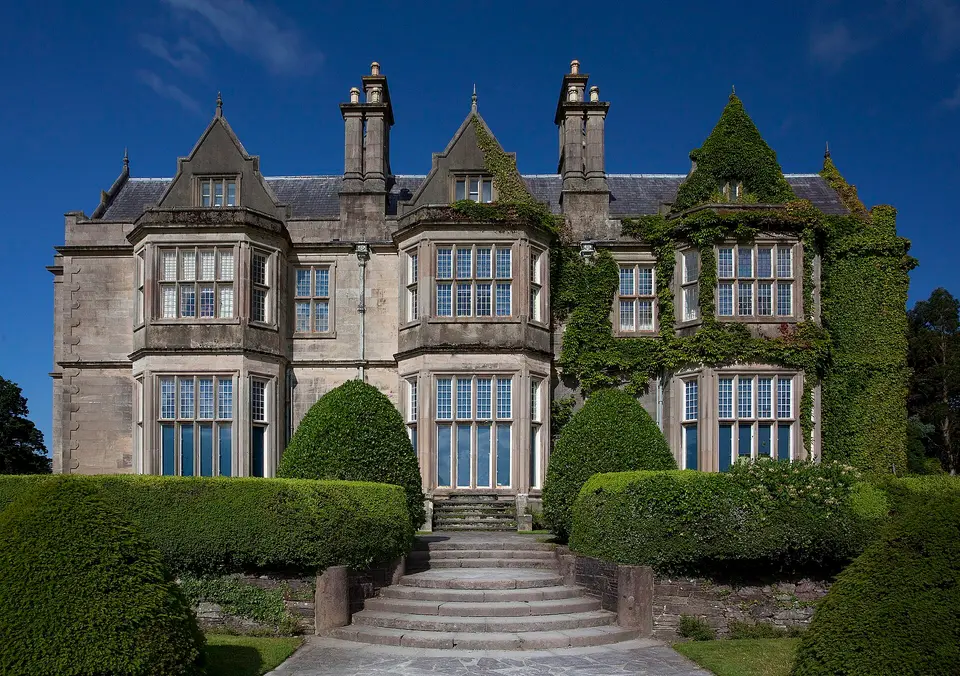
Muckross House gives an indoor focus to a day otherwise spent in the national park. The contrast between furnished family rooms and the servants’ working spaces helps explain how the household functioned, rather than presenting the building only as a grand lakeside facade.
Continue into the gardens after the house, where lawns and planted areas change the scale of the visit. The traditional farms are a separate experience about rural life, so decide whether you want the house, the farms or both before allocating the afternoon.
Plan the visit
Use the Muckross visitor access south of Killarney, not a town-centre parking pin. Check the operator’s house tour and farm arrangements separately. A photograph of the exterior does not indicate that every room or garden area is accessible on your chosen day.
A good choice for a closer look at a ruined religious community
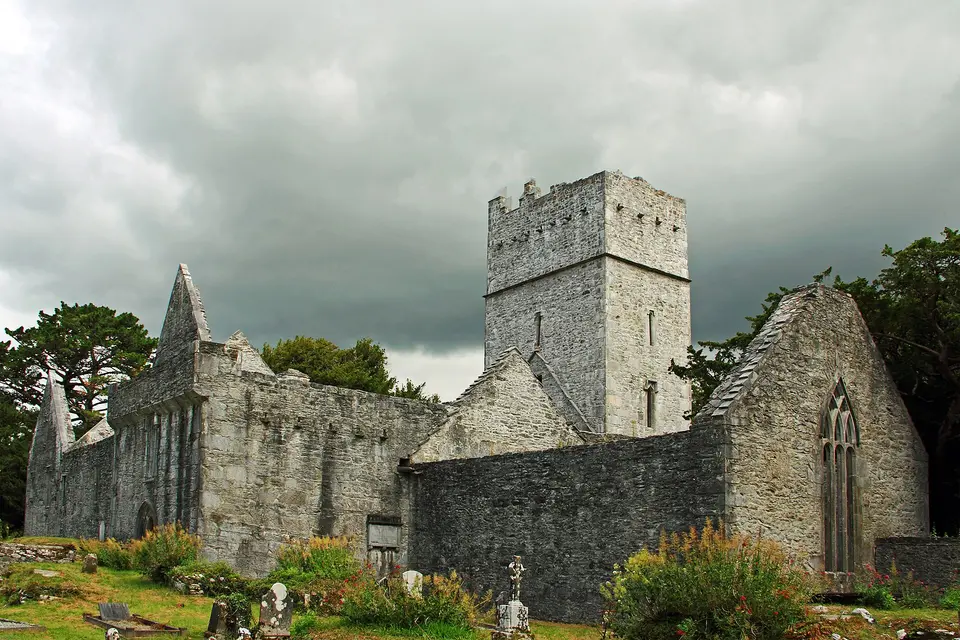
The sheltered cloister is the most revealing part of Muckross Abbey. A yew grows at its centre, while the surrounding rooms help make sense of the friars’ daily life. Despite its familiar name, this was a Franciscan friary, founded in the fifteenth century.
Look beyond the church walls to the spaces used for eating, sleeping and communal activity. The building is also part of a burial ground, which gives the visit a continuing local significance alongside the medieval architecture.
Plan the visit
This is an unguided monument, not an indoor museum with a staffed exhibition route. Approach through the national park using its visitor information and treat the burial ground respectfully. Allow for weather and uneven historic surfaces.
A good choice for a short outdoor stop focused on early history
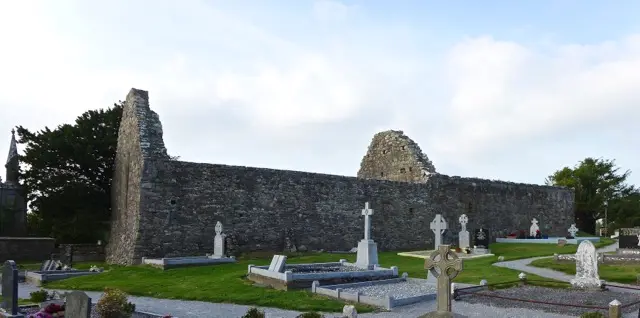
Aghadoe changes the direction of the day, taking you to the other side of Killarney rather than farther into Muckross. The church ruins, surviving round-tower base and ogham stone preserve different stages of religious activity on one site.
Look for the carved stone and the surviving doorway rather than expecting a complete church interior. Some architectural elements were reconstructed by later antiquarians, a useful reminder that the ruin’s present appearance has its own history.
Plan the visit
The mapped place is the church ruin at Aghadoe. It is outside central Killarney and separate from Muckross, so plan the connecting journey. Heritage Ireland lists it as an unguided site; do not assume an attended visitor centre or an accessible interior.
Photo: Berthold Strucken, CC BY-SA 4.0. Resized and converted to WebP. The full photograph is linked. Licence checked 2026-09-23.
Make the day work for you
Before you set off.
Keep the geography in mind
Muckross House and Abbey are south of Killarney. Aghadoe is north-west of town. Pair the Muckross visits if you want less backtracking, and add Aghadoe only when the connecting journey fits your day. The map shows locations, not a verified walking circuit.
Choose the right visit for the weather
A house tour and a roofless friary offer different shelter. Confirm the house arrangements before relying on an indoor visit, and keep the outdoor sites flexible if conditions change. The national park publishes its own access information.
A few useful answers
Are these places in Killarney town centre?
No. The two Muckross places are south of town, within the national park, while Aghadoe is to the north-west. Use each place’s directions to plan the approach.
Research reflects the linked sources on the dates shown. Menus, admission and access arrangements can change. Photographs may show an earlier appearance; follow each credit for the original file and date.


_1.jpg)