




Use the ruins as shorter stops
Carlow and Ballymoon do not offer suites of furnished rooms. Their architecture rewards attention, but they need a different plan from a timed house tour.
Carlow’s own castle is best understood as a short stop on a town walk. For a fuller day, the surrounding choices let you move from an empty medieval courtyard at Ballymoon to a family home at Huntington or restored rooms in Kilkenny. The useful question is how much interior visiting you want.
Explore the castles 4 places, with access explainedTwo towers explain a castle’s dramatic collapse.
Read a medieval planA bare courtyard enclosed by heavy granite walls.
Visit a living houseGuided rooms and gardens at Clonegal.
The two ruins are outdoor experiences. Huntington and Kilkenny offer organised interior visits, with their own tickets and access arrangements. Kilkenny lies across the county boundary.
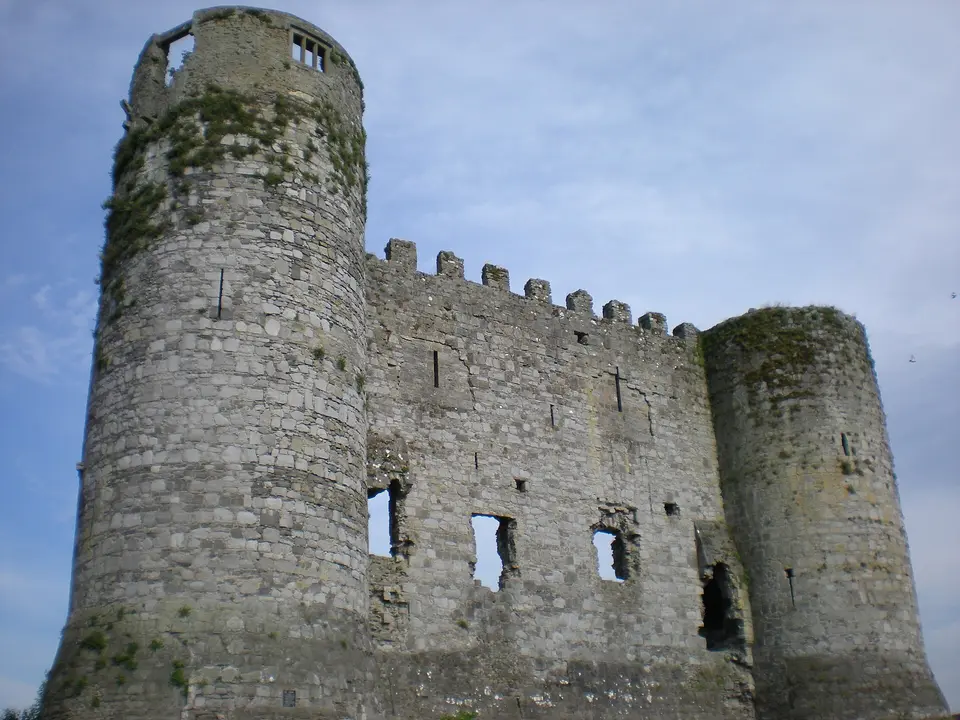
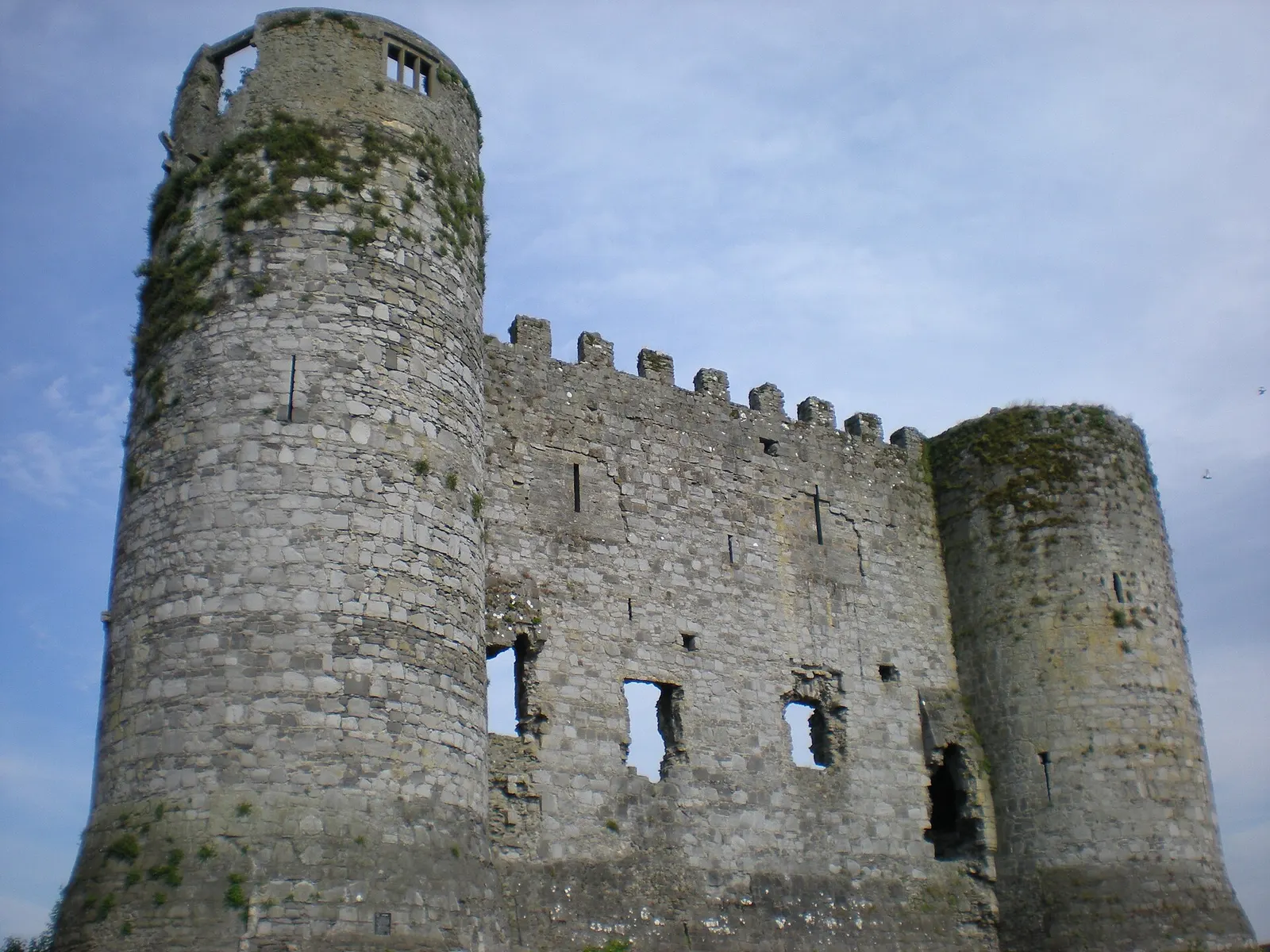
Carlow Castle.jpg by Age Bosma, CC BY-SA 3.0. Resized and converted to WebP. Display may be cropped; the full photograph is linked. View full photograph.
Carlow, County Carlow · 800 m from Carlow centre, straight line
A short stop that makes more sense once you know why half the castle is missing.
Built in the early thirteenth century and attributed to William Marshal, the castle originally had four corner towers. Its most dramatic damage came much later: an attempted conversion in 1814 used blasting charges, bringing down a large part of the structure. Two towers and the wall between them survive.
Come to read the outline of the lost building and its position near the meeting of the Barrow and Burrin. This is an open-air ruin, not a collection of rooms to tour. It fits naturally into a walk around central Carlow.
OPW identifies it as an unguided national monument. A complete current gate timetable was not confirmed; use public approaches and observe barriers. No interior admission, dedicated parking or step-free route is promised. Wear footwear suitable for an outdoor historic site.
Check the official visitor information ↗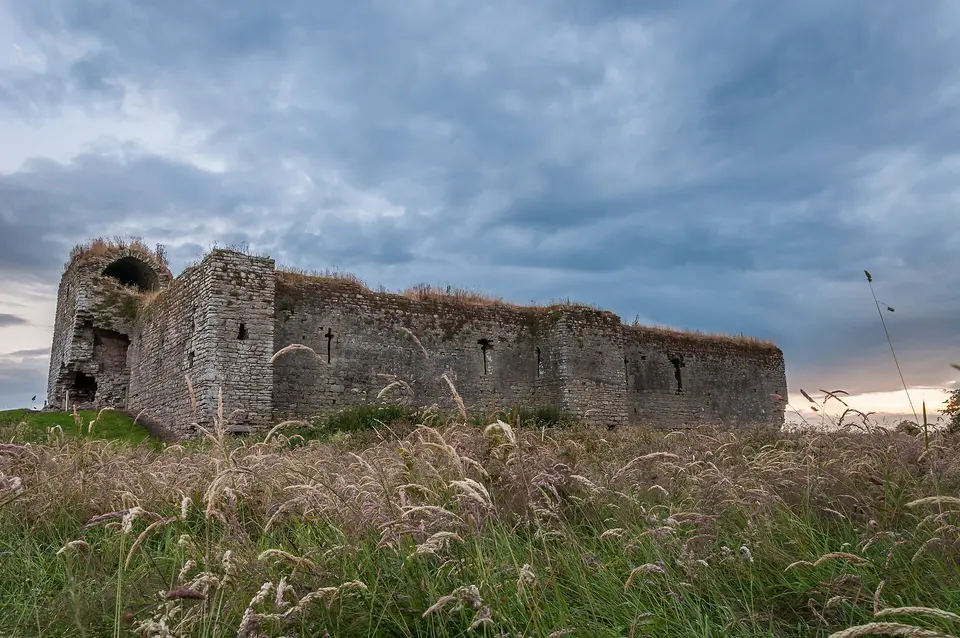
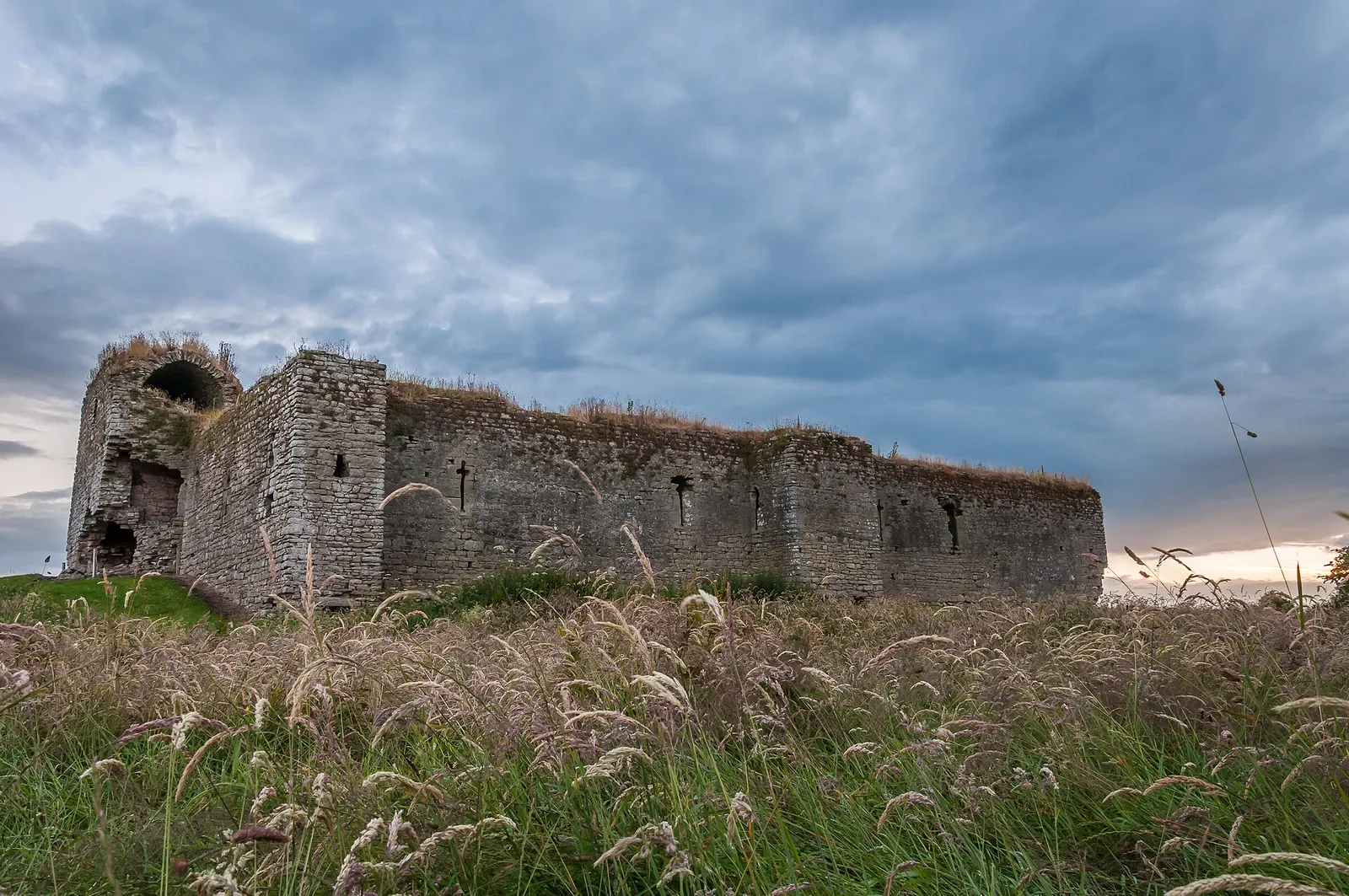
Ballymoon Castle sunset 2.jpg by Poleary91, CC BY-SA 4.0. Resized and converted to WebP. Display may be cropped; the full photograph is linked. View full photograph.
Near Bagenalstown, County Carlow · 15.7 km from Carlow centre, straight line
For an unusually clear courtyard plan without the distraction of a later mansion.
Ballymoon’s thick granite walls enclose a roughly square court, with projecting towers and a substantial gateway. The interior is now bare, although buildings once stood against the walls. Its fourteenth-century setting is better established than the identity of its builder, which remains uncertain.
Walk the enclosure and look for traces of rooms in the masonry. There is no furnished keep to climb, so the appeal is the shape and texture of the ruin itself. It suits a short architectural stop near Bagenalstown.
Carlow Tourism describes access from the R724 over a small timber footbridge. This is an outdoor monument without a verified staffed admission schedule. Parking capacity and accessible access were not confirmed. Follow local signs and avoid treating the roadside as a dedicated car park.
Check the official visitor information ↗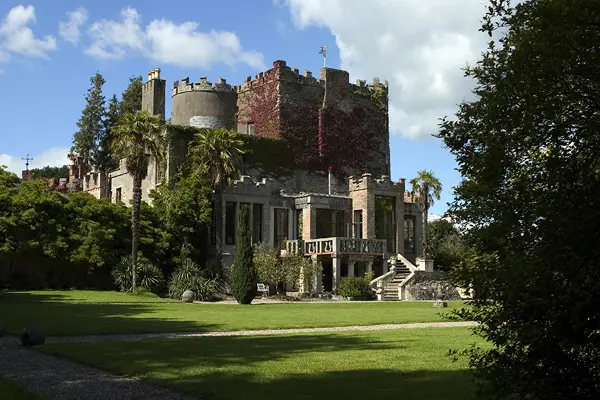
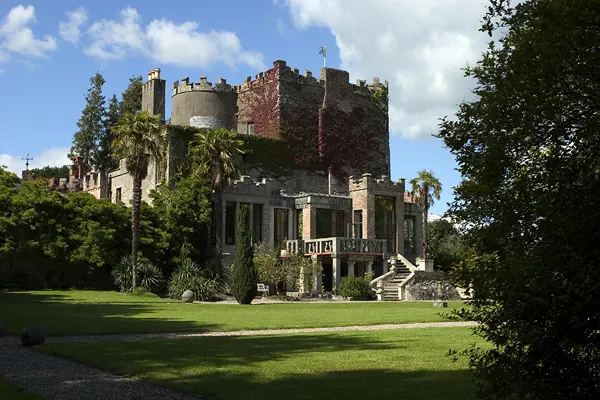
Huntington Castle.jpg by Liam Hughes from Milwaukee, WI, USA, CC BY 2.0. Resized and converted to WebP. Display may be cropped; the full photograph is linked. View full photograph.
Clonegal, County Carlow · 25 km from Carlow centre, straight line
For a lived-in house and old gardens rather than an empty defensive shell.
Huntington was built as a garrison in 1625 and later developed as a family home. That change of use is central to the visit: domestic rooms, collections and gardens sit within a building that began with a military purpose.
Guided interiors and the gardens offer two different ways to spend time here. The old kitchen and conservatory bring the household into focus; outside, the Yew Walk gives the estate a quieter character. Private events sometimes change the normal visitor arrangements.
The operator lists daily opening from May to September, 11:00 to 17:00, with house tours at 13:00, 14:00, 15:00 and 16:00. Other advertised months chiefly operate at weekends and holiday breaks. Tours do not run on private wedding days. On-site parking is available; dogs and picnics are not permitted. Confirm tickets for your date.
Check the official visitor information ↗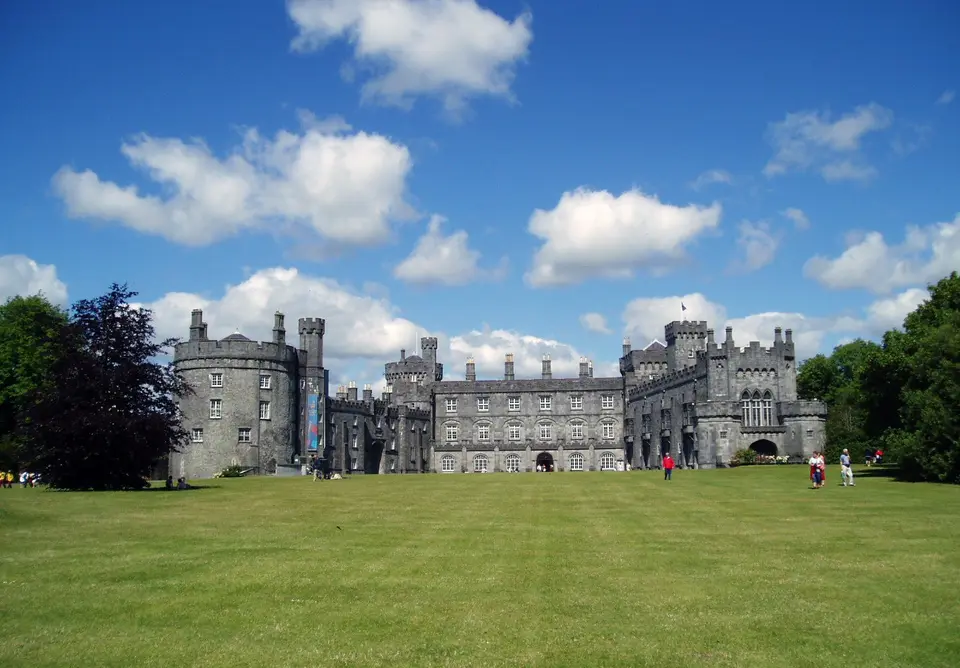
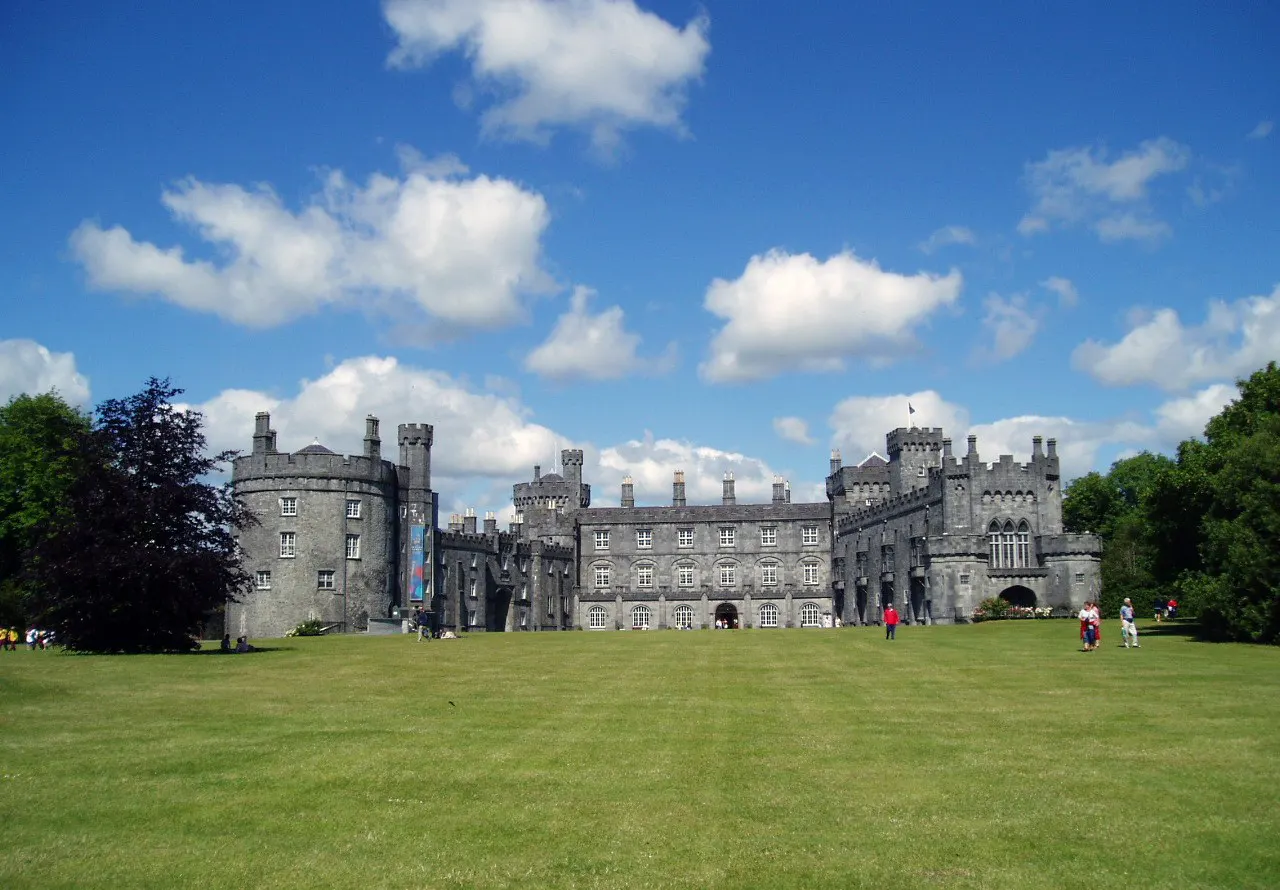
Kilkenny-castle.jpg by No machine-readable author provided. Tolivero~commonswiki assumed (based on copyright claims)., Public domain. Resized and converted to WebP. Display may be cropped; the full photograph is linked. View full photograph.
Kilkenny City, County Kilkenny · 30.4 km from Carlow centre, straight line
For furnished rooms and a picture gallery at the centre of a walkable city.
The castle began as a Norman stronghold and became the Butler family’s home for centuries. What you visit inside chiefly reflects its later domestic life. The restored Victorian rooms show how a fortress became a comfortable and highly public statement of status.
The Picture Gallery, library and family rooms reward a slower visit than an exterior photograph. The park gives a different perspective on the building and can be enjoyed separately. Choose the interior if furniture, paintings and household life interest you.
OPW lists adult self-guided admission at €8 and summer guided visits at €12. April to September hours are 09:15 to 17:30, last entry 17:00; October to March, 09:30 to 17:00, last entry 16:30. Park hours differ. Use official tickets and check access requirements for upper rooms.
Check the official visitor information ↗Carlow and Ballymoon do not offer suites of furnished rooms. Their architecture rewards attention, but they need a different plan from a timed house tour.
Huntington and Kilkenny offer different domestic histories. Pick the one that suits your direction and interests, then leave time for its town or gardens.
Ballymoon is approached over a small footbridge from the R724. A dedicated car park and accessible route were not confirmed. Check the arrival arrangements instead of inferring them from a pin.
Our choices focus on what you can see and how you can visit. Sources and checking dates appear on each card. Opening dates and admission can change. Distances are measured from Carlow centre in a straight line, not along roads. Photographs show the named buildings; their dates and licences are linked in the credits.
Explore CarlowMore things to seeCastle guides across Ireland